Despite a strong 7.8 per cent growth in the first quarter, the Indian economy is expected to grow at 6.5 per cent in the current financial year as the impact of US tariffs on Indian exports will reduce prospects, particularly in the second half, ADB said on Tuesday.

India should resist knee-jerk responses to tariff volatility in the US and instead use the current geopolitical churn to build manufacturing scale at home, former G20 Sherpa and former chief executive officer of NITI Aayog Amitabh Kant said on Wednesday.

Russian President Vladimir Putin announced his upcoming visit to India in December and expressed his intention to address the trade imbalance between the two countries, particularly concerning India's crude oil imports from Russia. He also lauded India's independent stance on international issues and highlighted the strong relationship between the two nations.

Jaguar Land Rover will begin assembling premium cars at its new Tamil Nadu plant on February 9, marking a step towards full-scale luxury car manufacturing in India.
While growth in India is largely domestic and hence the overall GDP effect may not be more than 0.15-0.2%, but overall trade will be impacted due to every country going back to the drawing board, points out Madan Sabnavis.

The US has granted India permission to buy Russian oil already in transit to ease global supply pressures amidst the West Asia conflict. This decision comes after India agreed to halt sanctioned Russian oil purchases and substitute them with US oil.
The lawmakers slammed opposition leaders over their remarks on the development, alleging that they were "happy" with the US government's move when "everyone" should be standing together in such a situation.
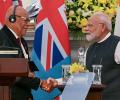
Fijian Prime Minister Sitiveni Rabuka discussed US tariffs on Indian goods with Prime Minister Narendra Modi, noting that "somebody is not very happy with you." The discussion occurred during Rabuka's visit to India to strengthen ties.
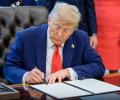
The collective West has always opposed strong leaders and economic development in India, asserts Colonel Anil A Athale (retd).

Brazilian President Luiz Inacio Lula da Silva on Wednesday (local time) issued a firm response to United States President Donald Trump's announcement of a 50 per cent tariff on Brazil by invoking the country's 'Economic Reciprocity Law', while asserting Brazil's sovereignty and rejecting 'any form of tutelage' in what he described as Trump's attempts to interfere in the country's internal judicial affairs.

Greer said that India has taken down some digital services taxes and is moving tariffs down.

Persisting uncertainties related to the US trade policies pose downside risk to the overall demand in the Indian economy while the inflation outlook for the near term has become more benign than anticipated earlier, RBI said in its latest bulletin on Thursday. In the August bulletin, the Reserve Bank of India (RBI) also said that India's sovereign rating upgrade by S&P bodes well for capital inflows and sovereign yields, going forward.

United States President Donald Trump has said Prime Minister Narendra Modi 'knew he was not happy' with India's purchases of Russian oil and that Washington, DC can raise tariffs on New Delhi 'very quickly'.

US President Donald Trump greeted India on its 77th Republic Day, highlighting the historic bond between the two democracies amid ongoing trade tensions.

Stock market benchmark indices Sensex and Nifty surged in early trading session on Tuesday after India and the US agreed to a trade deal under which Washington will bring down the reciprocal tariff on Indian goods to 18 per cent from current 25 per cent.

India has been on an FTA-signing spree of late. Since 2021, it has signed eight trade agreements, three of which -- with the UK, Oman and New Zealand -- were finalised in 2025 alone.

India will maintain multiple sources for crude oil purchases and diversify them to ensure stability in the supply chain with national interests remaining the "guiding factor" for the procurement, Foreign Secretary Vikram Misri said.
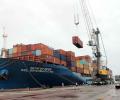
Industry associations and companies in the United States, including the US Chamber of Commerce, Coalition of Services Industries and the iconic bike company Harley Davidson have called on the Donald Trump dispensation to push India to reduce tariffs, non-tariffs, and regulatory barriers to boost American exports.
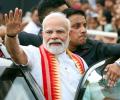
Prime Minister Narendra Modi asserted his commitment to protecting the interests of farmers, cattle-rearers, and small-scale industries amid increasing pressure from potential US tariffs. He also emphasized the importance of using 'made in India' goods.
United States President Donald Trump has backed a sanctions bill that could impose 500 per cent tariffs on countries buying Russian oil, giving the White House leverage against countries like China and India to stop them from purchasing cheap oil from Moscow.

Rising for the sixth consecutive session, gold prices rallied Rs 1,000 to hit yet another record high of Rs 105,670 per 10 grams in the national capital on Monday, lifted by expectations of a rate cut by the US Federal Reserve this month and robust demand in overseas markets.
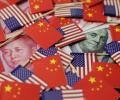
China on Friday said it is assessing whether to start trade talks with the US on tariff reductions following recent approaches by Washington, a move that would possibly ease the tit-for-tit tariff war between the world's two largest economies. "China is making assessments as the United States has recently reached out to convey messages to China through relevant parties many times, expressing hope to engage in talks with Beijing over tariff issues," the Chinese Commerce Ministry said in a statement in Beijing.

Sitharaman in her budget speech said that the customs proposal "aim to further simplify the tariff structure, support domestic manufacturing, promote export competitiveness, and correct inversion in duty".

Customs regimes can lead to labyrinthine legal disputes. Budget 2026 must recognise that an excessively defensive Customs posture can itself become a trade barrier, point out Mukesh Butani and Shankey Agrawal.
Government representatives told a parliamentary panel that the US has not officially conveyed to India that it should cut tariffs by April 2.
Prime Minister Narendra Modi is likely to address the UN General Assembly in September. The session will address global conflicts and trade negotiations between the US and India.

United States President Donald Trump on Tuesday boasted about India-US defence cooperation, claiming that India's order for 68 Apache attack helicopters was delayed by five years and that Prime Minister Narendra Modi personally raised concerns over the long delivery period during a meeting with him.
Modi's remarks came hours after the US and India agreed on a trade deal under which Washington will bring down reciprocal tariff on Indian goods to 18 per cent from current 25 per cent.
According to the Economic Survey 2026, the appropriate stance for 2026 is therefore one of strategic sobriety rather than defensive pessimism.
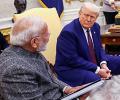
The Indian government is studying the implications of US President Trump's announcement to impose tariffs on Indian goods and remains hopeful of concluding a bilateral trade agreement.
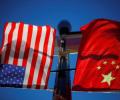
China on Tuesday retaliated US President Donald Trump's imposition of 2nd round of ten per cent tariffs on its export by slapping an additional 15 per cent tariffs on American goods and initiated legal action against Washington in WTO while leaving the door open for talks to address each other's concerns.
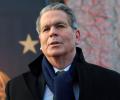
In the wake of the FTA between India and the European Union, the United States has described the Europeans as 'very disappointing', saying they were unwilling to join Washington, DC in putting tariffs on New Delhi for its purchases of Russian oil because of this trade deal.

Exporters of gems and jewellery have said the free-trade agreement (FTA) has brought relief to their sector because this opens up the world's second-largest market and brings them on a par with China and Thailand, which face zero tariffs on shipments to Europe.

President Trump is celebrating the US-India trade deal as a landmark achievement, with a major focus on boosting American coal exports to India and other trade partners.

The delegations from the US and Iran head to Islamabad on Friday, carrying a ceasefire that is already fraying, a Strait that is technically open and practically closed, and a negotiating agenda that would challenge even parties actually negotiating in good faith, which these groups are not. Prem Panicker continues his must read blog on the Iran War.

'The statistical confidence bands of the fan charts of the forecasts will provide a better sense of the potential variability of outcomes.'

Do not exit in panic or buy falling stocks without reassessing fundamentals; instead, build a watchlist and invest gradually with a disciplined, long-term approach.

India's policy for agriculture trade must move commodity-by-commodity to gain maximum benefits as US President Donald Trump's 26 per cent tariff on exports from the country take effect, said agriculture economist Ashok Gulati in a recent policy paper.
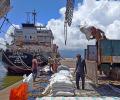
The Indian exporting community is "very" concerned about the possible reciprocal tariffs of the US as it could severely hurt MSME shipments to America in the short run, Federation of Indian Export Organisations President SC Ralhan said on Wednesday. He suggested that the government should come forward and support exporters to deal with these tariffs.
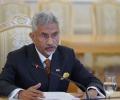
The relations between New Delhi and Washington are on a downturn after Trump doubled tariffs on Indian goods to a whopping 50 per cent, including 25 per cent additional duties for India's purchase of Russian crude oil.
